Overview - Julspel 2025
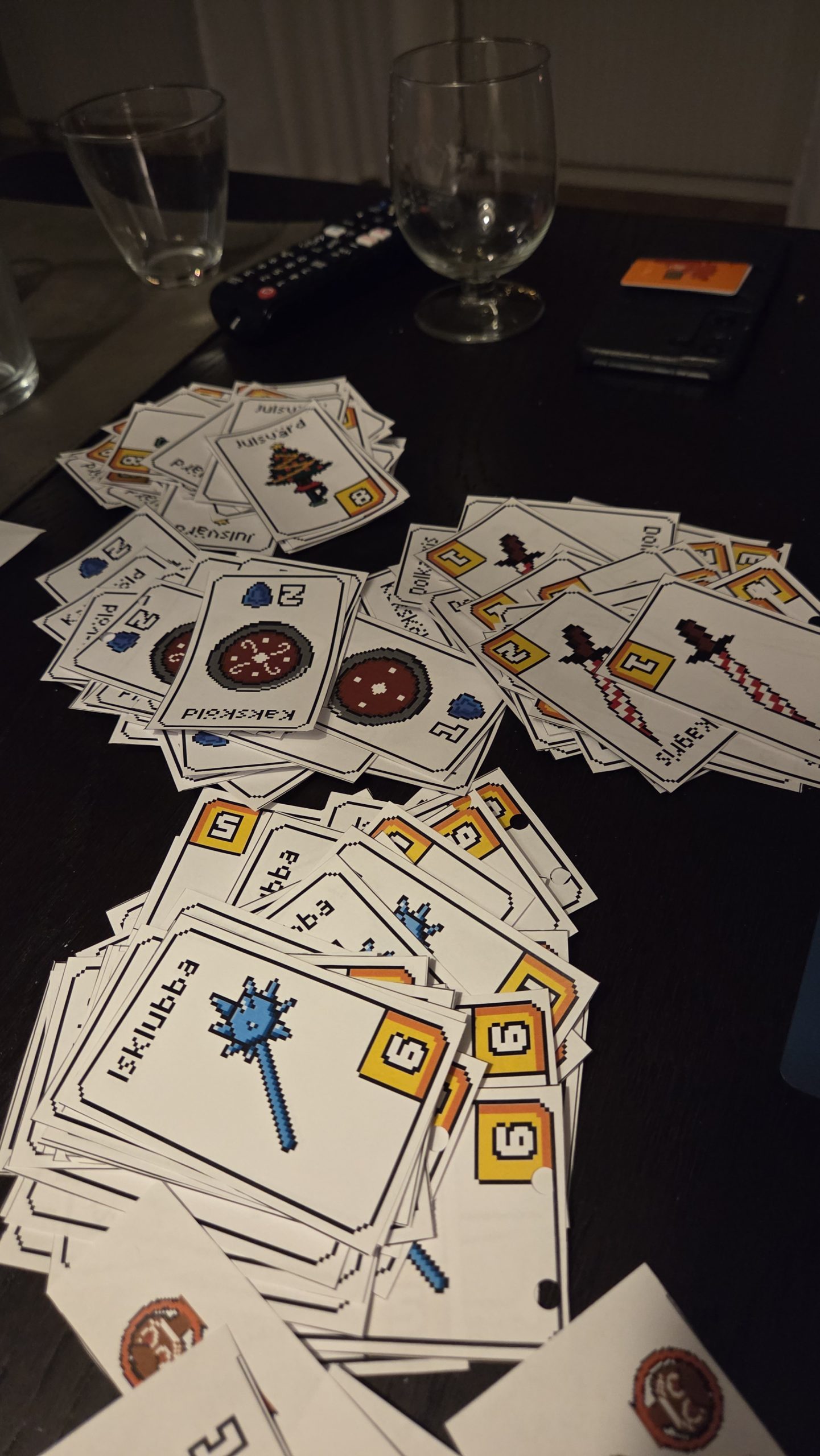
This is the Christmas game 2025 edition that I make annually for my niece and nephew.
This year I wanted to create something closer to both a video game and a board game as previous years been more leaned towards scavenge hunting and physical activities.
This game is a deck building RPG adventure, inspired by video games like Slay the Spire and a board game called Sanctum, where progressing adds cards to their decks and defeating enemies will make you stronger by letting you play more cards per turn.
I wanted to create a game where I gave the kids a chance to make them feel individually stronger as they progress the game, but also feel the joy of overcoming hard challenges by cooperating later in the game.
Goal of the game
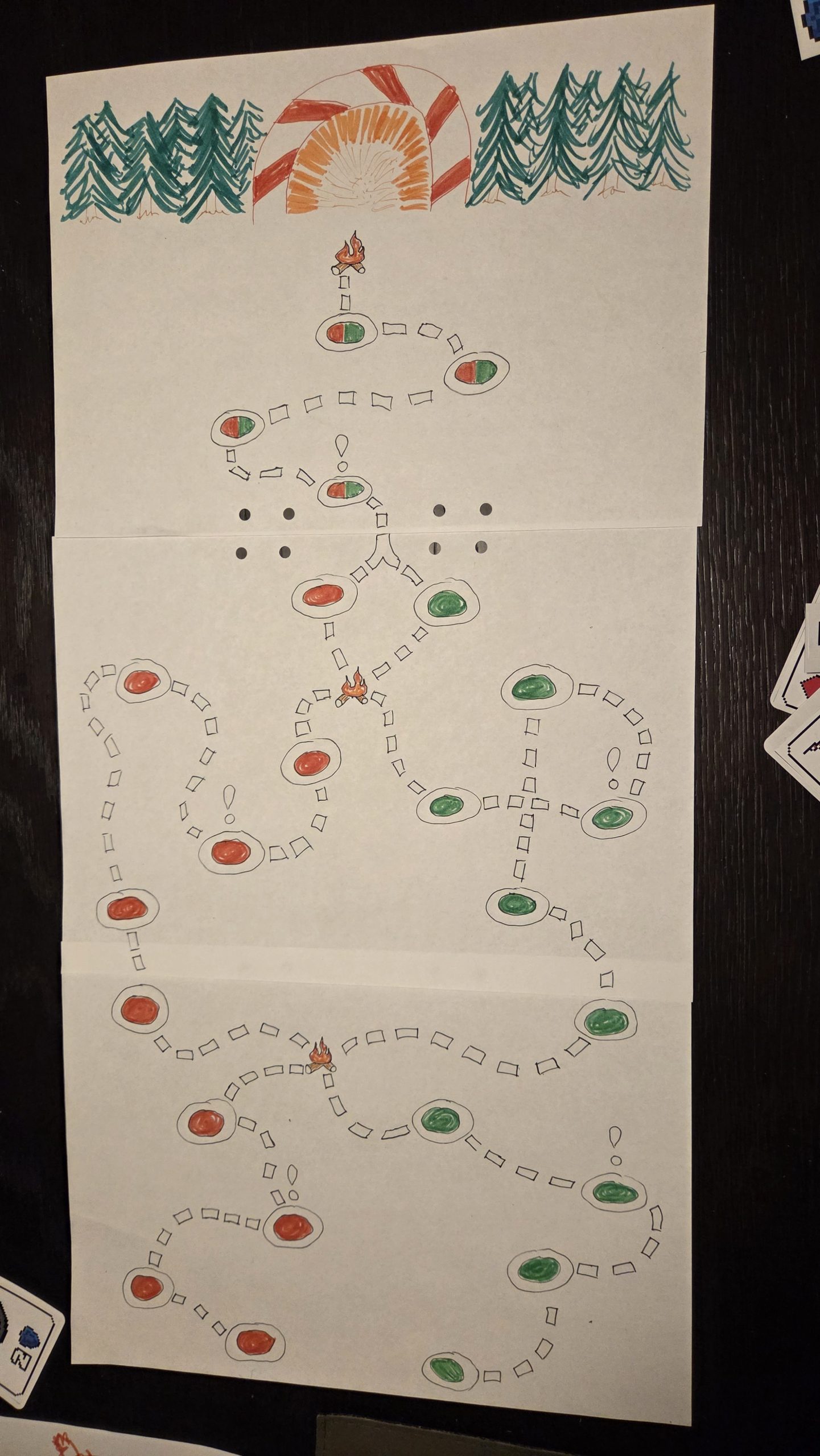
In this game my niece and nephew where told that our home town Markaryd is being invaded by evil gingerbread cookie men that was being summoned from a candy cane portal in the woods. They were told that they need to traverse towards it, fight off the gingerbread men they encounter and destroy the portal.
At first they have to travel on separate paths before eventually they can start work together.
They’ll also encounter rest sites where they can regain some health and swap cards with each other if they feel like that.
On their way there they also will be tasked by some Santa’s little helpers to do some activities outside of the game to get rewarded with upgrades, which will allow them to have more cards in hand during play.
To win the game they have to destroy the portal.
How to play
Each player starts with 10 health and their own starter deck of card. Both decks has the same starting cards in them. Health are depicted by using the same amount of real life candy as tokens.
At the start of combat, draw until you have 4 cards in hand.
You may play as many attacks as you have attack slots.
Enemies has an amount of hearts, and each heart has a health value.
Each total attack value must be equal to or greater than any of the health values to remove a heart. Removing all hearts kills the enemy.
Killing an enemy rewards you with an EXP token. If an enemy is killed, place an EXP token on the next Attack Slot upgrade. When the amount of token required has been met, flip the Attack Slot upgrade and you may now play an additional attack during your attack turn.
After you have played your attack turn, the enemies starts attacking you and tries to deal damage to you based on their attack stats.*
You may play defense card as soon as the enemies are attacking you. If an enemy deals damage to you, place health tokens in the spending area of health.
Utility cards can be played both during attacking and defending. If a utility card has an attack value attached to it, it needs to be played as an attack and be placed on an attack slot.
Utility cards cost Mana. You unlock and gain 3 Mana when you gain your first card that uses mana. After that, gain +1 max mana every new encounter.
To play a utility card you simply place it on the table and play out it’s effect. If it has a mana value, you pay the amount of mana by putting your mana tokens in the spending area of mana.
Any cards played gets put in a discard pile. If there is no more cards in your deck to draw, shuffle your discard pile back into your deck and draw from the top again.
When all enemies are dead the encounter is over and the players gets rewarded with a present booster pack which contains new cards to add to their decks.
After the cards has been added and the deck has been adjusted to each players liking, each player moves one step forward on the board.
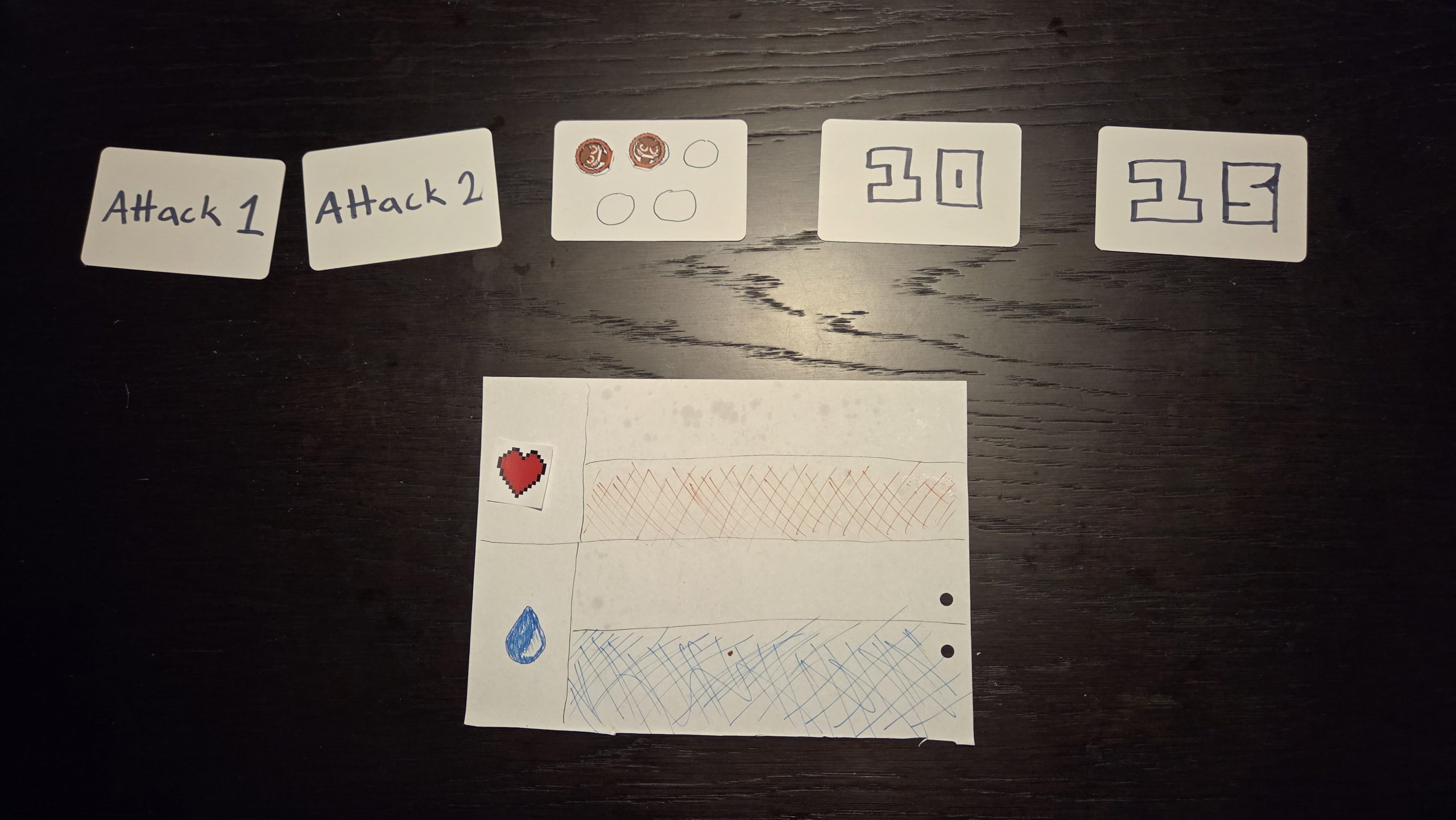
More attack slots can be unlocked by killing enemies and gaining EXP tokens. Health and Mana are depicted by using real life candy. Mana is unlocked after gaining your first card using mana. Max mana is increasing every new encounter.
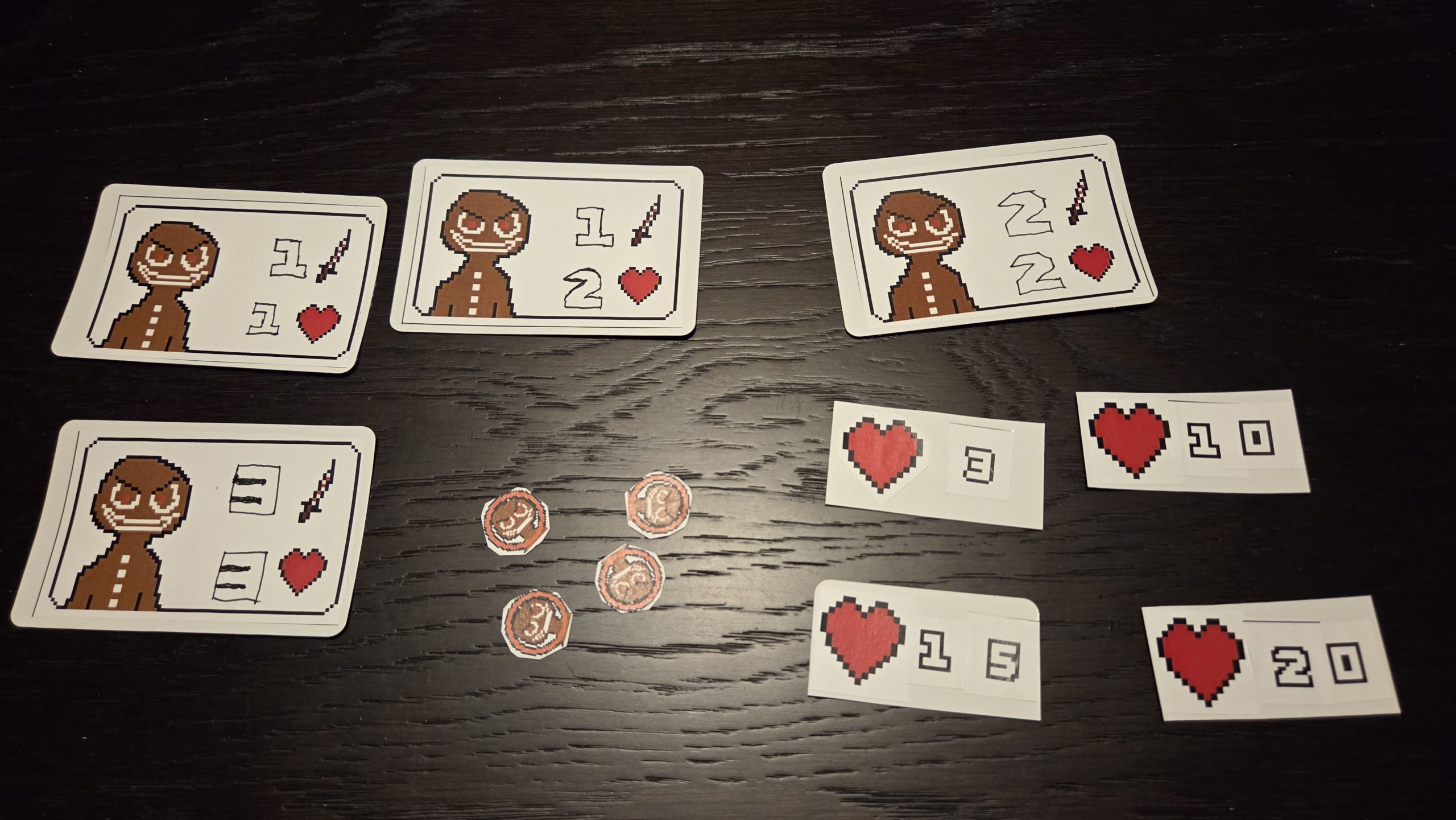
Enemies have both attack stats and health stats. Enemies has an amount of hearts based on their health stat and deal damage based on the attack stat.
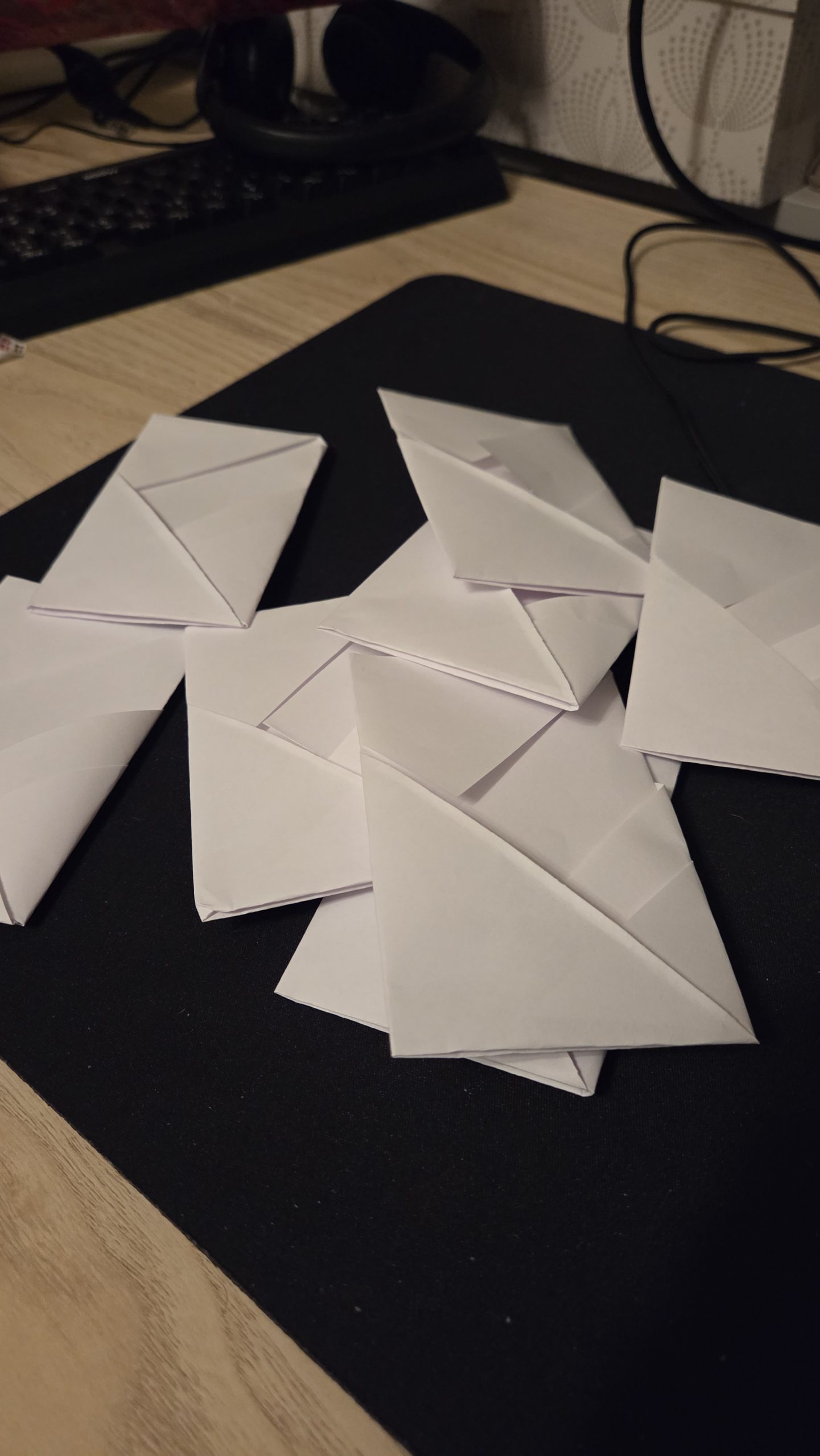
Defeating enemies grants the player a present booster pack which contains new cards to add to their decks.
Card design
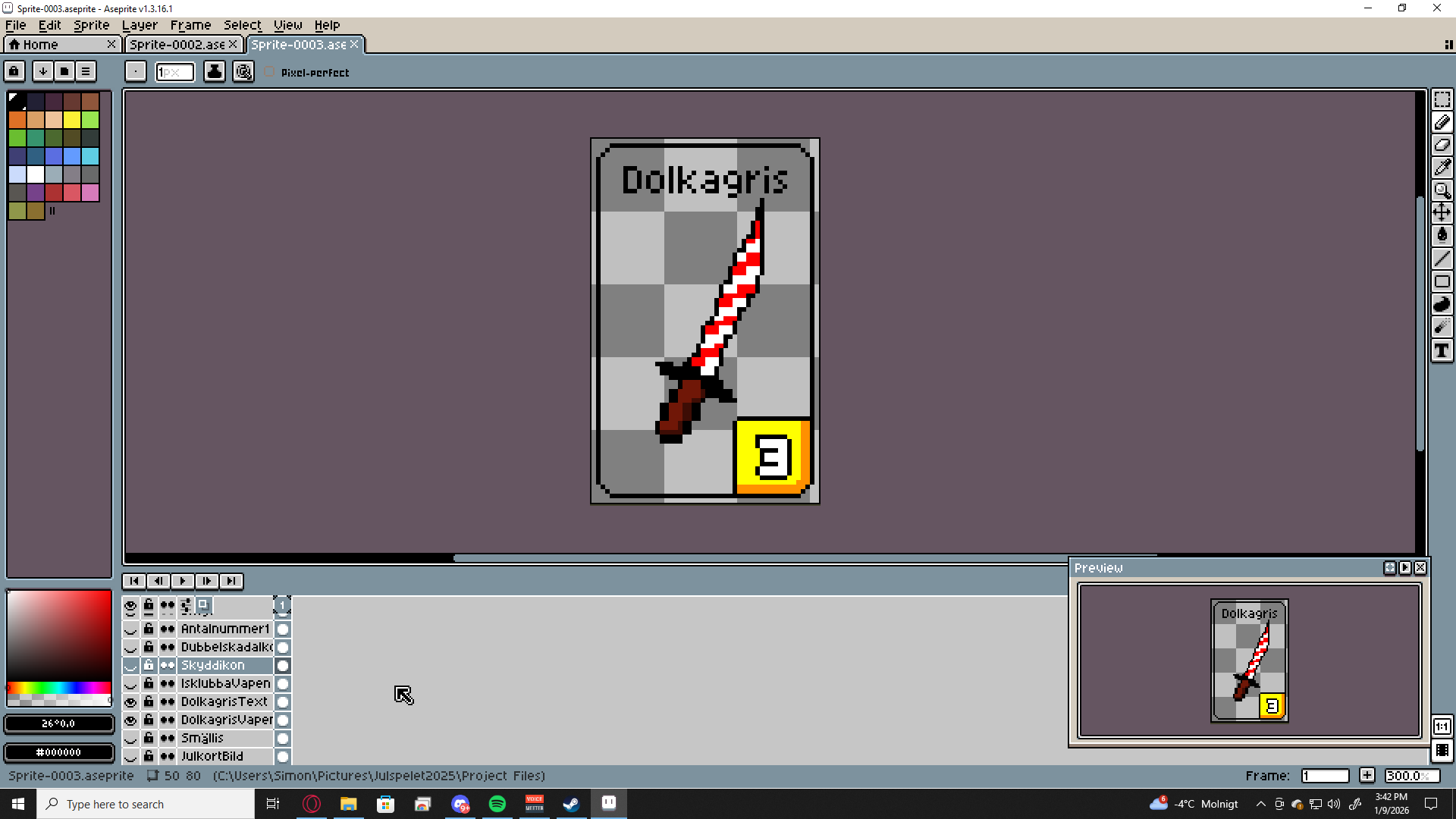
I used Aseprite to create the pixel art design of the cards and Adobe Illustrator to make sure margins were correct as well as prepare for printing the cards.
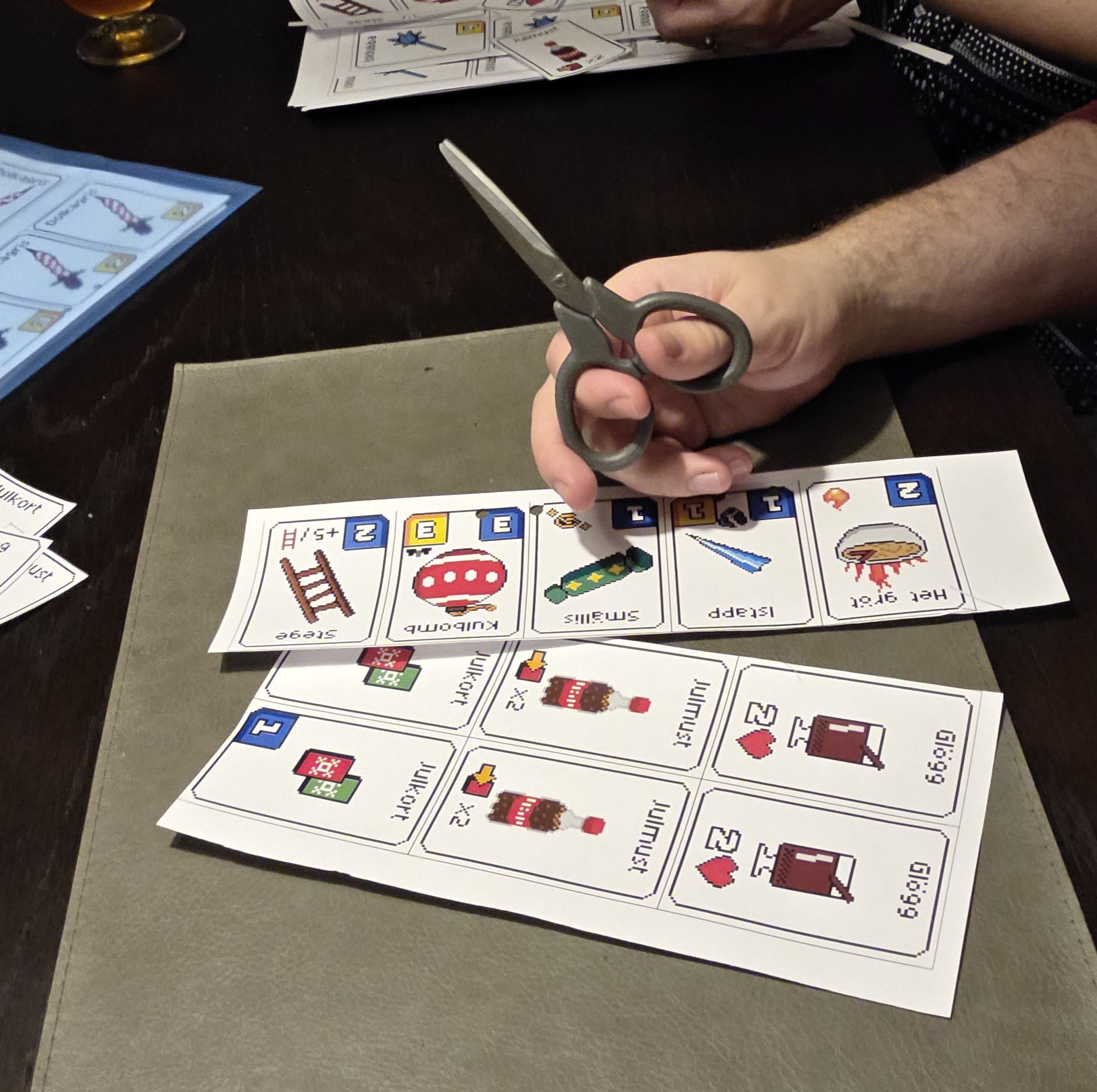
The printed art was later cut out and glued to blank playing cards.
Attack and Defense Cards
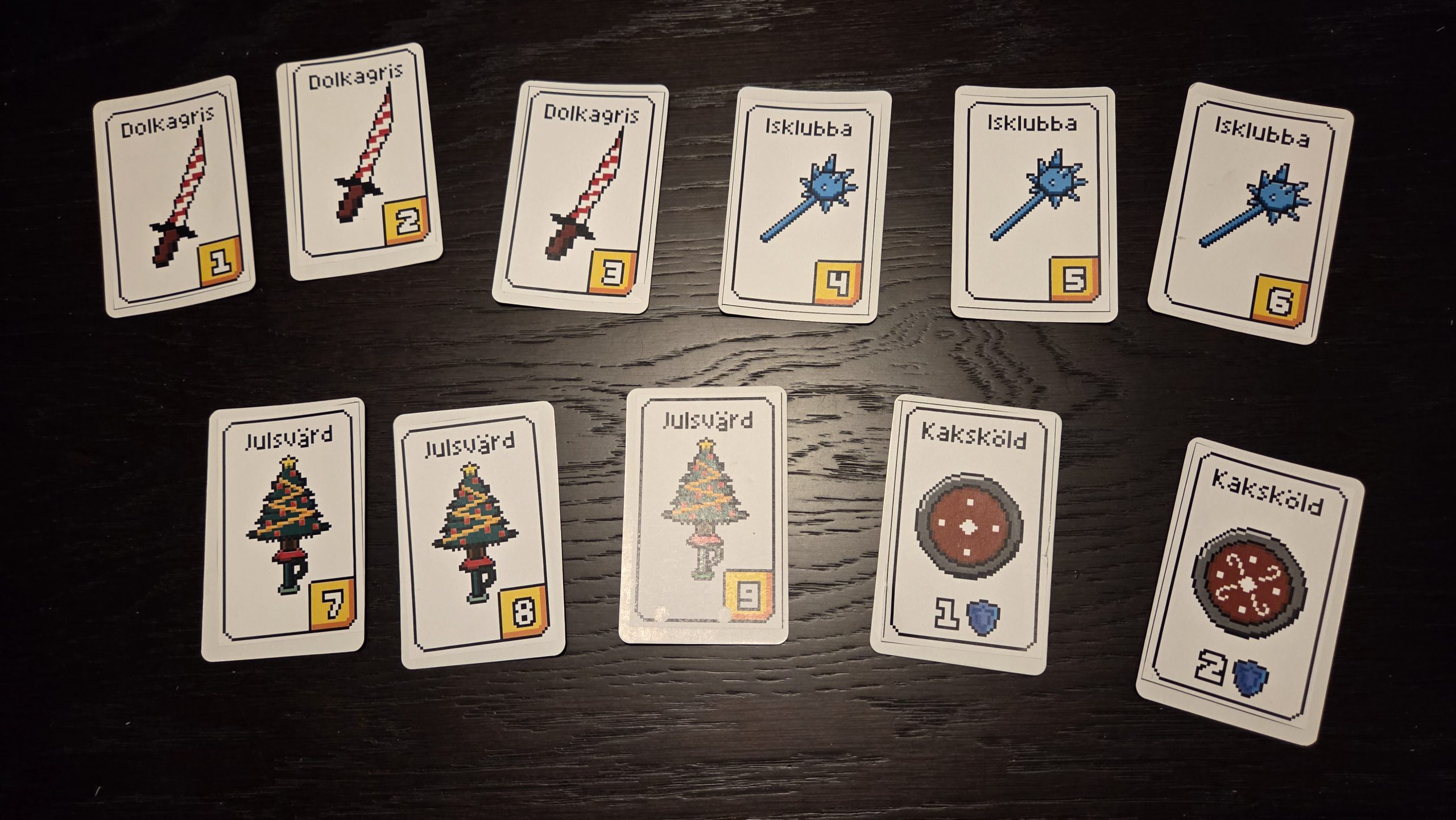
The different attack cards have a numerical value in the lower right corner which showcases the amount of damage the card deals when being played.
“Dolkagris”/”Dagger sugar cane” is a play on words since sugar cane in swedish is “Polkagris”, and the word for dagger is “dolk”. I attempted to do the same with the “Isklubba”/”Ice club” and “Julsvärd”/”Christmas Sword”, but couldn’t come up with something equally punny.
The “Kaksköld”/”Cookie Shield” gets a visual upgrade as well with more decorated frosting on it on the stronger version.
Utility Cards
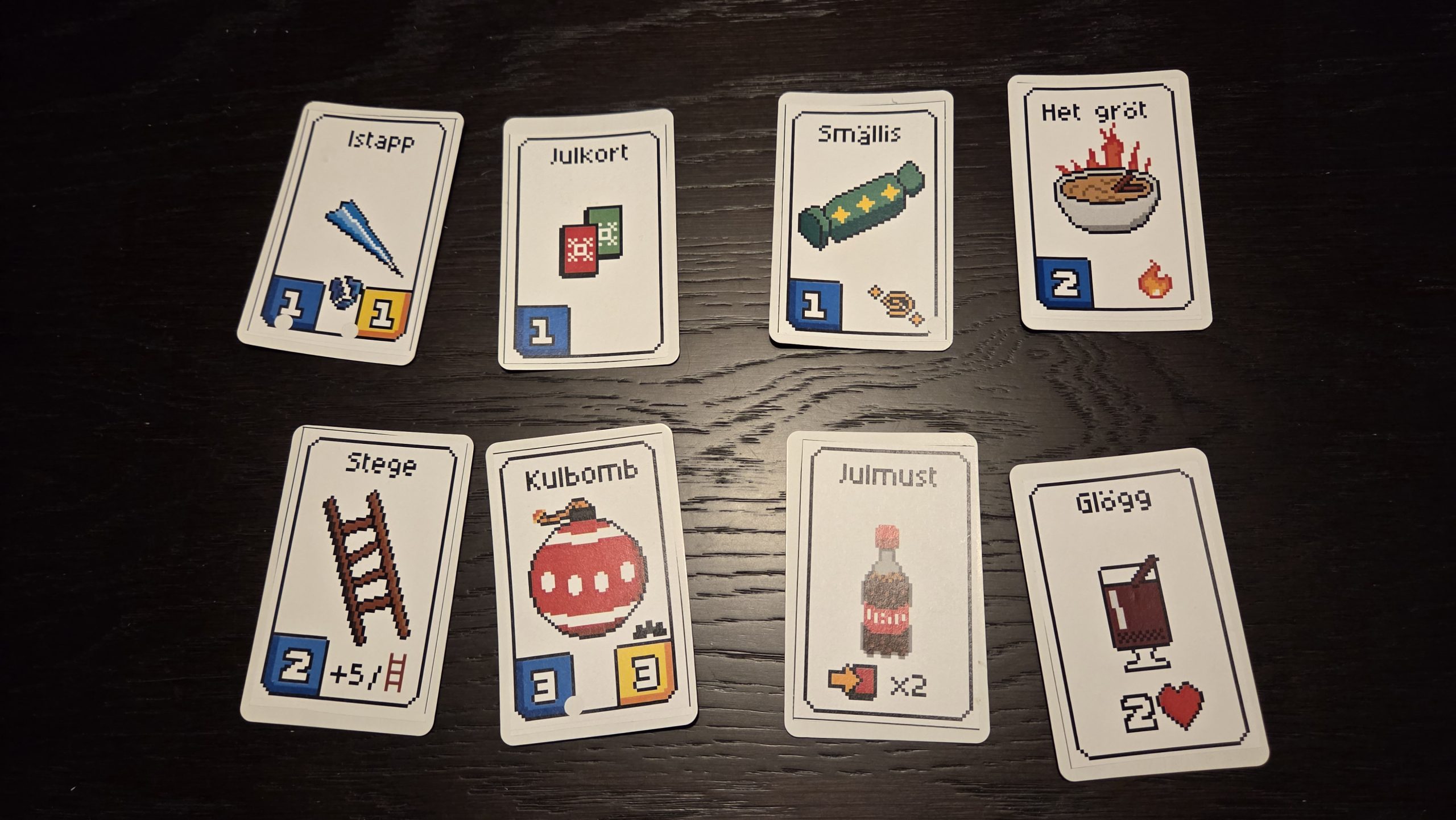
“Istapp”/”Icicle” – Mana cost 1
Deals 1 damage to target enemy and destroys any shield token on an enemy.
“Julkort”/”Christmas cards” – Mana cost 1
Draw 2 cards
“Smällis”/”Christmas cracker” – Mana cost 1
Stun one enemy. Stunned enemy skips their attack turn.
“Het gröt”/”Hot porrige” – Mana cost 2
Reduce the heart value of all hearts on an enemy by 5 for the rest of the encounter.
“Stege”/”Ladder (straight)” – Mana cost 2
If you played a card that is incremental to a previous card, your attack deals +5 damage. For each extra increment your attack deals +5 more damage. (example: playing 3 cards, one with Attack Value (AV) 1, one with AV 2 and one with AV 3 it deals 1+2+3 in base damage = 6 + 2 incremental steps (2 x +5 = +10) = 16 damage
“Kulbomb”/”Marble bomb” – Mana cost 3
Deal 3 damage to all enemy hearts for one turn. (This was later changed to reduce all enemies hearts by 3 for the rest of the combat for the sake of the experience for the kids)
“Julmust”/”Christmas must” – Consumable, one time use.
Play before another card to double the next cards effect.
“Glögg”/”Mulled wine” – Consumable, one time use
Play to heal 2 hearts
Present Card Boosters
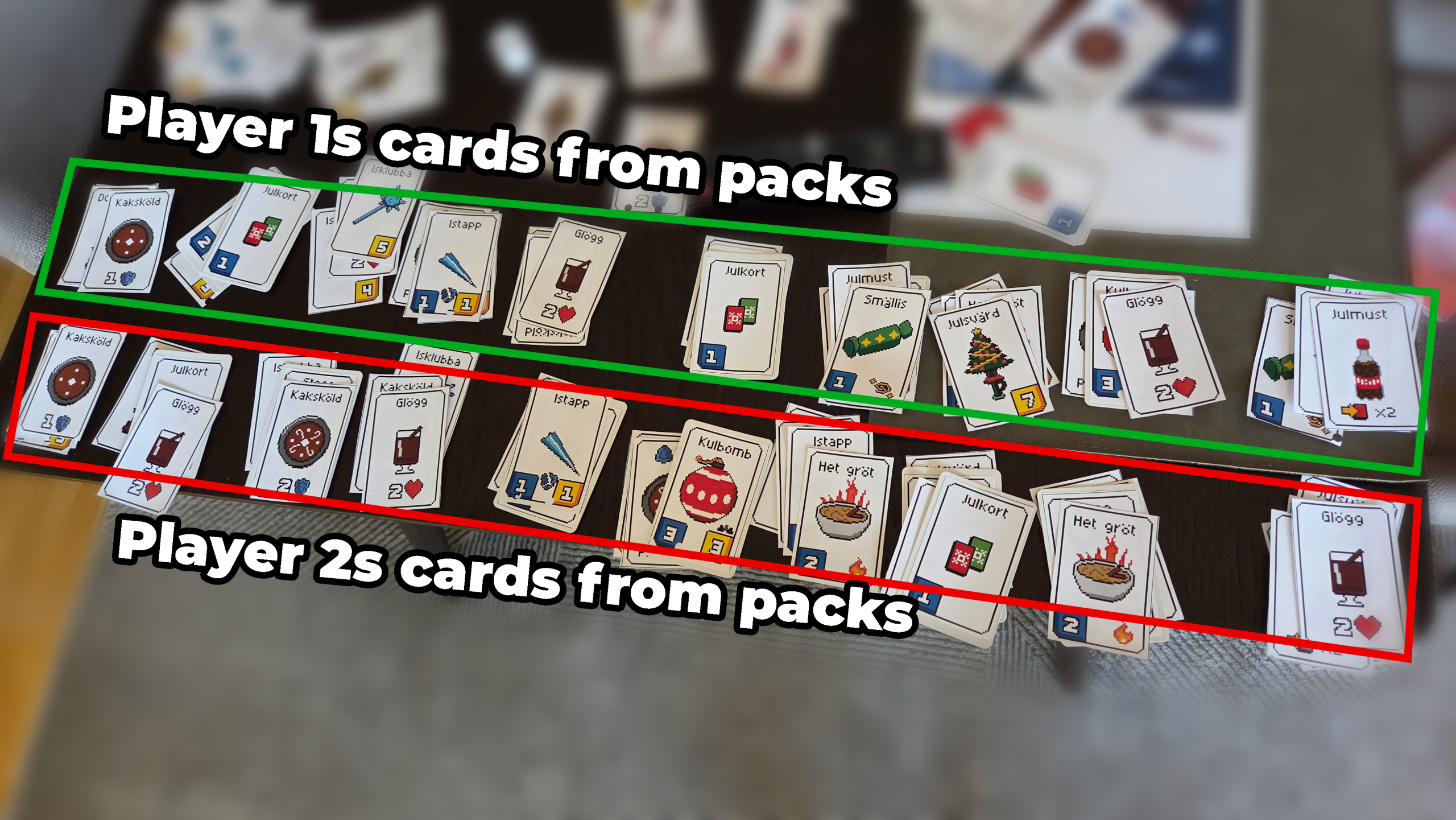
The booster packs of cards that were handed to the players were carefully altered so that each player would get the feeling of getting the stronger cards on several power spike gates. But I never introduced one new tier of attack card to only one player. So when both “Isklubba” and “Julsvärd” was introduced, both of them got at least one version of them.
Further into the game the packs also consisted of more cards. In the beginning the packs consist of 4 cards and the later packs consist of 6 cards.
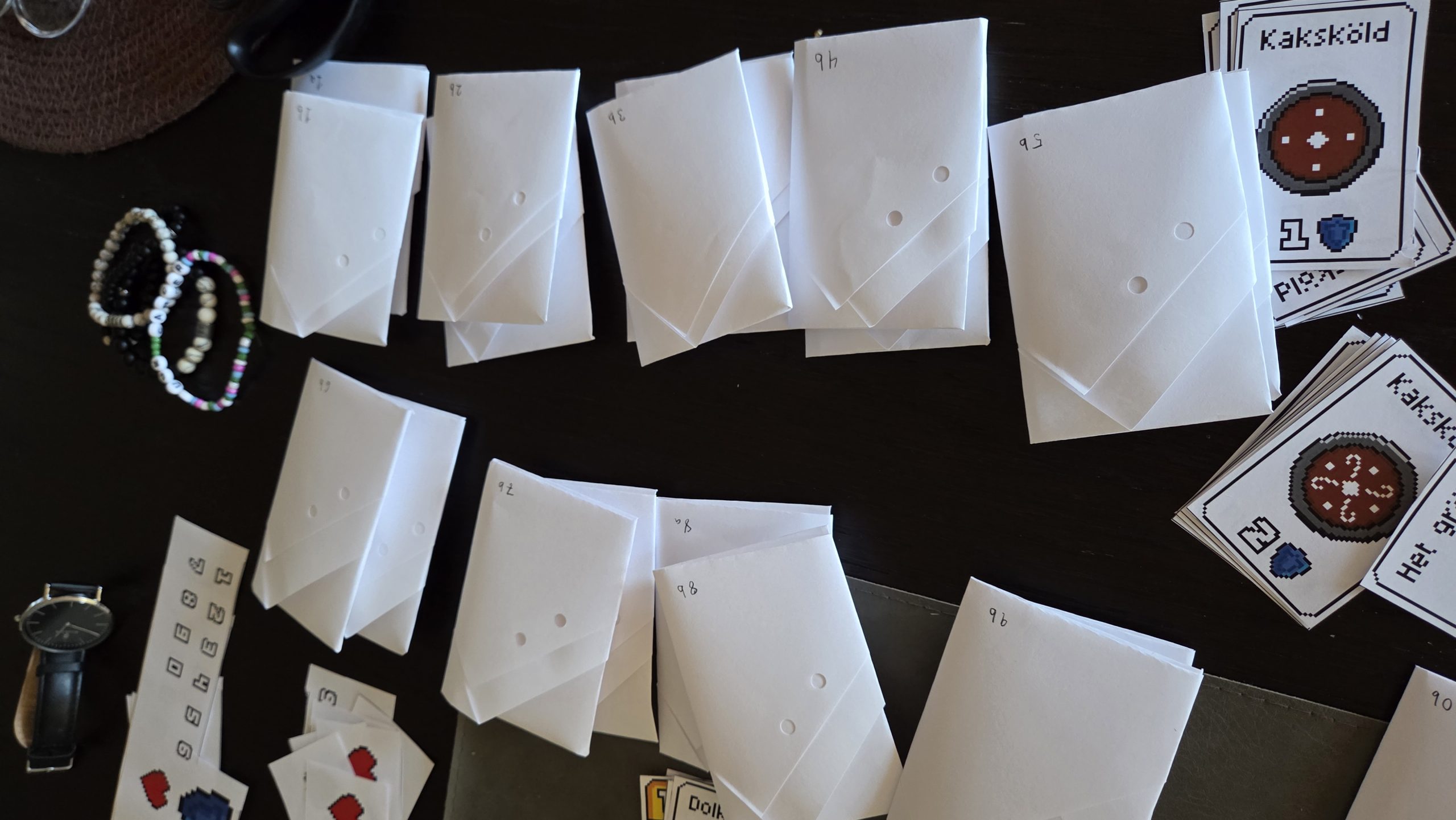
The packs were made out of 1/2 of an A4 paper where I found a video about making a glue and tapeless “envelope” which I could rapidly make in just a couple of minutes .
Design intent
I wanted to focus on creating a power fantasy to focus on attacking and defeating the enemies rather than having the kids think too much of strategic defense. I felt that the way that I’ve designed the enemy encounters that the “Kaksköld” card would be enough and let them focus on strategize on removing the enemies hearts instead. “Smällis” and “Glögg” are the only cards to be considered defensive.
If I would’ve had more time I’d design more cards that combine attack and defense, such as a low damage card but it also adds a shield for the enemies next attack turn.
With the time constraint I had I wasn’t able to properly playtest and balance any mana cost or damage output, but I had faith in my “Mental Playtesting” that it would at least work out well enough for this small one shot experience.
Narrative
I created the simple narrative of that there’s a Candy Cane Portal that has appeared in the forest of our home village and evil gingerbread cookie men gets summoned out of it and invades the village.
Along the board of the game there are nodes with an exclamation mark besides it. These are events where the players have to do out of game activities to test their worth to NPCs that are Santa’s little helpers. Finishing any of their tasks will give them a new upgrade in their arsenal.
Two events will each reward them with magical gloves that lets the players draw up more cards in their hand during their turns. And one event they had to make a drawing of a big damage weapon that they wanted to use to destroy the portal with. In game narratively the Santa’s little helper tasked them to use nearby scraps and junk to build whatever they wanted.
As they finally approaches the portal they get a chance to attack it with their cards they’ve collected to try bring it down. But after a few hits I wanted to have a surprise boss encounter and a spike in combat challenge. Which is were I told them “You hear grunting coming from the portal, and out comes a gingerbread cookie pig that attacks you”. The reception of this was a mixed bag from the kids as it took some time, moaning and twisting in their seats before they decided that it was time for a rest and snack time before continuing. I adjusted the boss’ health stats slightly from having 4 hearts to destroy to 3. The hearts where still big enough to give a slight challenge to them.

Reflection
During my travels down for Christmas I learned about a term from a podcast for a method that I’ve been using throughout my years of designing games, which is “Mental Playtesting”. Which is that you’re playing out your design inside of your head and figure out if it’s fun or not. It was thanks to this that I was able to focus on and spend most of my days visiting my family to make the art design of the cards. Although, time was still lacking, so I was not able to write out a rulebook or a cheat sheet in time all of the rules were inside of my head. Which could’ve helped with explaining some cards better and how combat works.
The feedback from my niece and nephew was that it was really fun and that the design of the cards were pretty. But the game was too long and they wanted it to be done quicker. They somehow still stuck through the whole session without much problem of signs of boredom. I’d hope and imagine that the mix of out of game activities and the progression of new strong cards helped make them feel that they were on a journey and not only playing cards.
Some cards were rarely used or was not used at all. The “Ladder”/”Stege” card was never played since it both were mechanically complex and I failed to properly explain the function of it. The mana cost, as with some other rarely used cards cost 2 mana to cast. With the somewhat unplanned mana regain mechanic I guess that it did not feel fun to spend more mana for something that would take so long to regain back.
Other cards with 1 mana value were powerful enough to overshadow the other cards. The “Julkort”/”Christmas cards” and the “Istapp”/”Icicle” were the ones that saw most play which almost always provided value during the encounters. My hunch says that they were easy to understand and the card design was clearer than any of the other cards. I’m still happy with how they were played out, and they used them very strategically and with care.
I would focus on fixing the mana regain rather than changing any mana cost on cards. As I would rather incentivize the players to spend mana. In hindsight I’d either give them more initial max mana the first time they unlock it so that they would feel more free to spend mana on higher cost cards.